Data and mathematics for a better world
How do you support organisations that are trying to achieve maximum impact with minimal resources? At Analytics for a Better World (ABW), the answer is: through data, mathematics and smart algorithms. ABW is a research institute at the University of Amsterdam that develops and applies advanced analytical techniques for NGOs and non-profit organisations, enabling them to optimise their decisions and processes.
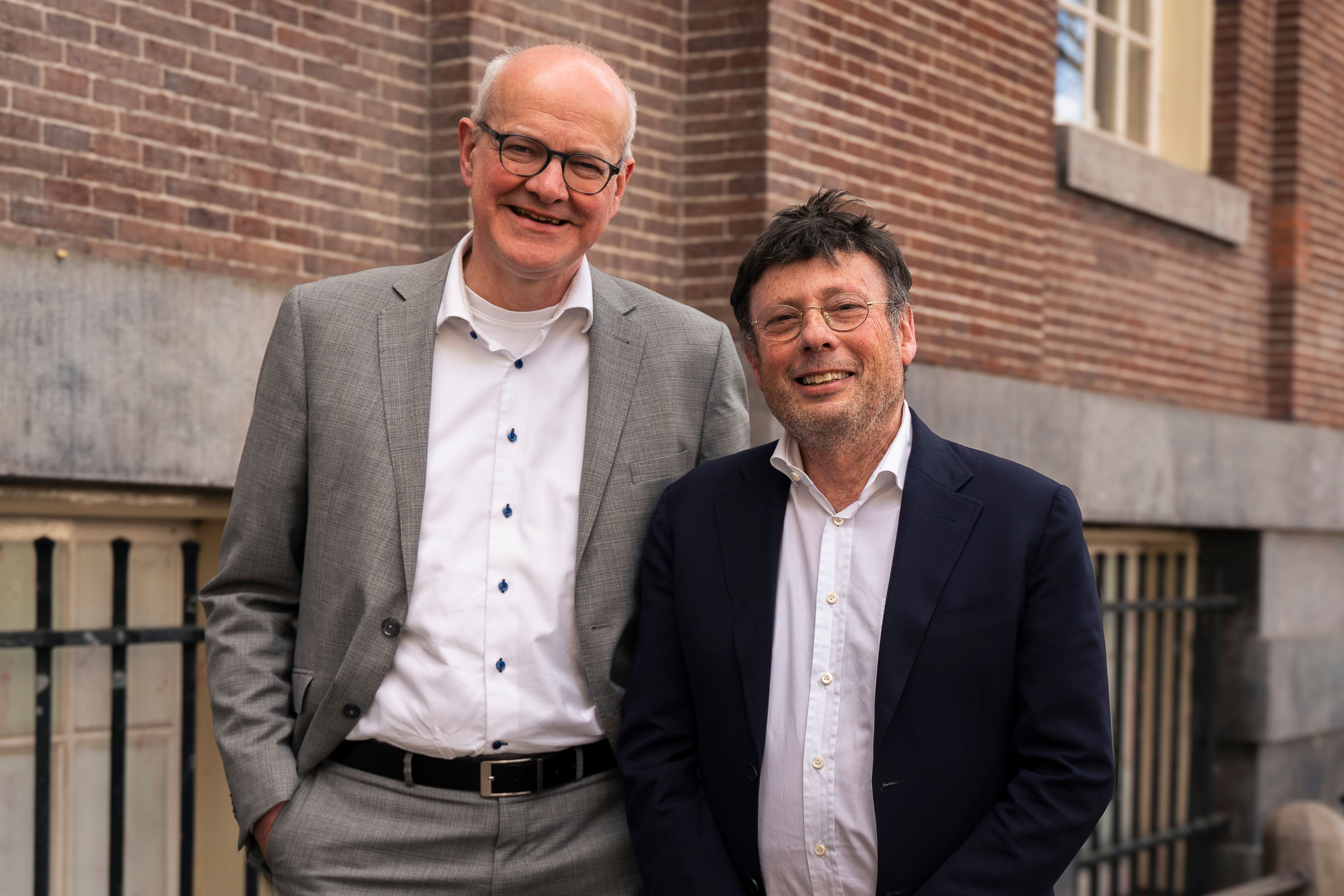
'In recent years, there have been substantial cuts in the NGO sector,' explains Marc Salomon, Dean of the Amsterdam Business School and co-founder of Analytics for a Better World. 'We want to demonstrate that, by applying mathematical techniques intelligently, these organisations can still continue their important work.'
Big data for big goals
Data are a goldmine for NGOs that want to achieve high impact with limited resources. Dick den Hertog, the Professor of Operations Research who founded Analytics for a Better World together with Salomon, explains why. 'You can use data to gain better insight into the current situation, to improve forecasts of what will happen in the future, and also to calculate the best course of action.'
A cleaner ocean
An important project to which Analytics for a Better World has contributed is The Ocean Cleanup, the NGO that removes large quantities of plastic from the ocean. Den Hertog explains: 'This plastic is carried by ocean currents and accumulates in five areas in the world’s oceans, where The Ocean Cleanup uses large nets, up to 2 kilometres wide, to collect it. In order to collect as much plastic as possible, the captain aims to follow the most efficient route. We have developed optimisation algorithms that enable the captain to receive the optimal sailing route every day.'
And with success: Boyan Slat, CEO of The Ocean Cleanup, has already indicated that he expects to be able to halve the time required to clean up the ocean. The costs are also expected to be more than halved, from 8 to 3.5 billion dollars.
Support from the fund
This is how an organisation with limited resources can still achieve substantial impact. Support from, among others, the UvA Fund plays an important role in this, Salomon explains. 'We aim to keep costs low for NGOs, because non-profit organisations simply do not have a great deal of money. That is why support from the UvA Fund, but also from our other partners, such as ORTEC, is so important.'
Students making an impact
Analytics for a Better World is also firmly embedded in teaching at the University of Amsterdam. Students, for example, write their Master’s theses on ABW projects and contribute to applications that make a direct difference. Den Hertog notes: 'Last year, for instance, a student continued work on an app I had previously been developing. This app helps small-scale farmers in African countries to optimise the feed for their animals, for example pigs, chickens or fish. In other words: what should the ingredients of the feed be, and how can you keep the costs as low as possible?'
The student improved the algorithm specifically for the very smallest farmers, so that they too can benefit. For students, the outcomes go beyond earning credits: they experience visible societal impact and encounter new scientific questions.
Dreams for the future
Den Hertog says: 'Ultimately, our dream for the future is that Analytics for a Better World will become superfluous. This is not a joke, because in the corporate sector our techniques have long since been discovered.' That is why he hopes that many more NGOs will become familiar with the possibilities offered by data and algorithms. In the coming years, Analytics for a Better World aims to focus on more high-impact projects, a larger international network and even stronger connections between research, teaching and practice. Two things are needed for this: 'Firstly, more sponsors, and secondly, greater awareness of what can be achieved with data and analytics,' Salomon explains. Education plays a key role in this. 'By training students who later go on to work at NGOs or international organisations, our knowledge is disseminated further.'