Young lawyers taking action for victims of war crimes
In a Dutch courtroom, a law student is concentrating as she types along with the proceedings. Who is standing trial? People suspected of war crimes, for example from Syria or Rwanda. Not before the International Criminal Court (ICC) in The Hague, but under Dutch law.
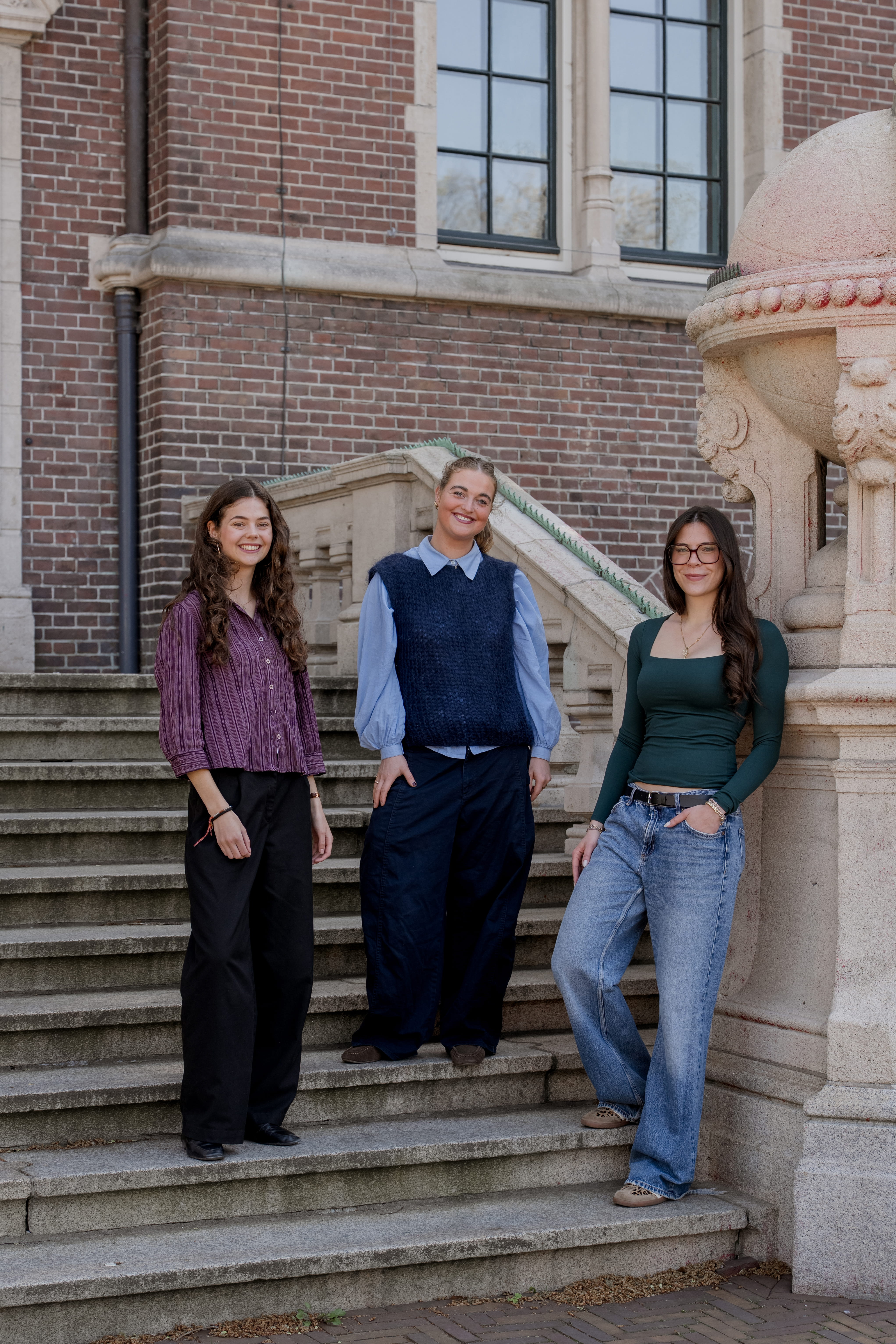
‘The International Criminal Court is not the only forum for prosecuting international crimes. National courts, including those in the Netherlands, also play a crucial role by investigating and prosecuting genocide, crimes against humanity and war crimes under domestic and international law. This can ease the burden on the international system and contribute to faster and more effective access to justice. It can also help make legal protection more accessible and effective for victims,’ says Chiara Maria Bauer (22), a Master’s student in European Law at the UvA.
Making court cases accessible
The Nuhanovic Foundation supports court cases through 'trial monitoring': following proceedings, reporting on them and making information publicly accessible. This is not only important for legal professionals, but especially for victims and affected communities who are often unable to attend a trial in person. The organisation also researches how international crimes can be addressed through national legal systems. This work is made possible in part thanks to support from the Fund for Legal Redress in International Crimes, which has been established with the UvA Fund.
From theory to practice
Juliette van Wechem (22), a Master’s student in European Law, and Bien Gratama (21), a Master’s student in Criminal Law, are also involved with the Nuhanovic Foundation. For them, the work is very different from their studies. Van Wechem: “During a law degree, everything is presented in a very factual way: this is how it is, and this is the law. This work really brings the law to life and shows its human side.”
Through the Nuhanovic Foundation, students are encouraged to engage with people who attend court hearings. Gratama explains: “During the trial in the Hasna A. case, I was struck by the fact that people from all kinds of countries came to the Netherlands, while most Dutch people had no idea that this case was taking place. The Netherlands is a small country, but it is impressive that these court cases are so meaningful to so many people.”
International crimes before Dutch courts
Under the principle of universal jurisdiction, serious crimes such as genocide, war crimes, torture and crimes against humanity can in some cases be prosecuted by another country, even if the crimes were committed elsewhere. Dutch law provides opportunities for this.
UvA Fund supporting students and victims
With support from the Fund for Legal Redress in International Crimes, UvA students can, through the Nuhanovic Foundation, contribute directly to improving access to justice for survivors of international crimes. At the same time, young lawyers gain the opportunity to obtain practical experience within a human rights organisation which, despite its modest size, has a significant impact. In this way, financial donations strengthen not only the development of new generations of legal professionals, but also access to justice for victims worldwide.