João Tribst: Can 3D Printing Make Dentistry More Affordable Through Source Reduction?
Winner Impact Call Award 2024
30 July 2025
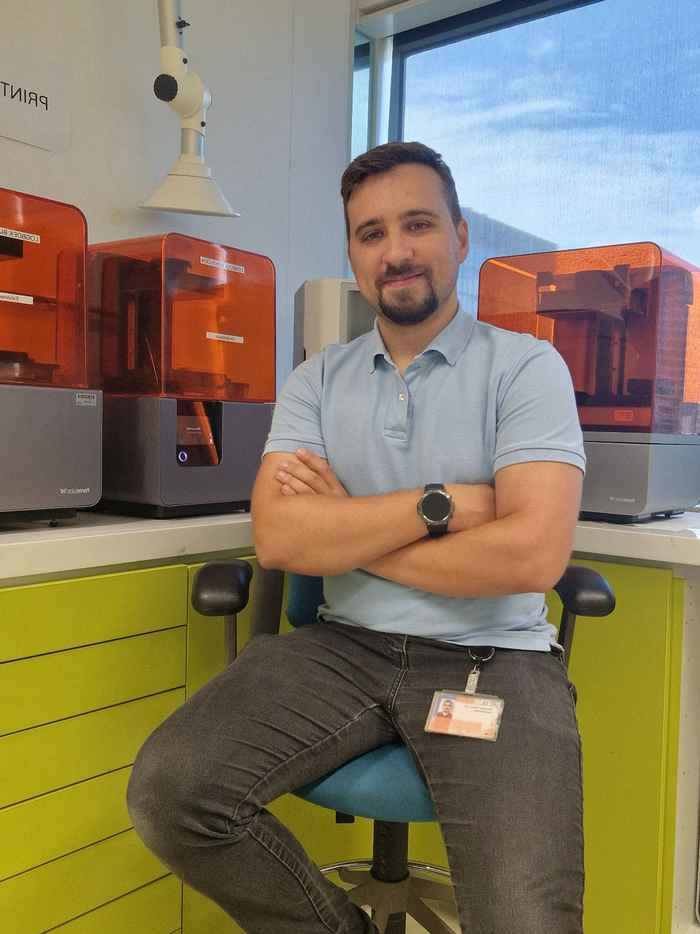
Tribst is originally from Brazil, where he studied dentistry and obtained his PhD. In 2018, he was awarded a grant for a one-year research stay as a visiting researcher at ACTA in the Netherlands. In 2021, he returned to ACTA, this time as a lecturer. His academic focus is on prosthetic dentistry and research that directly contributes to improving patient care.
What is your project about?
'With this research, we aim to explore how 3D printing can transform dentistry by offering cost-effective solutions for restorative treatments, such as crowns, bridges, and dental models. By optimizing parameters — for example, hollow printing and reduced resin use — we strive to lower costs while maintaining high quality.'
The project is part of the RRM (Restorative and Reconstructive Dentistry) section, which focuses on digitally driven dentistry to improve patient comfort and treatment efficiency.
The funding allowed us to acquire an open-source 3D printer and investigate sustainable 3D printing methods
Why did you apply for the Impact Call?
'The Impact Call offers a great opportunity to make dental care more affordable and accessible. The funding allowed us to acquire an open-source 3D printer and investigate sustainable 3D printing methods that reduce material waste and energy consumption, enabling us to implement these techniques in our clinic.'
What are your hopes for the future of your project?
'I hope this research helps ensure easy access to high-quality dental care, particularly for vulnerable populations, through the use of 3D-printed restorations. I envision a future in which personalized dental treatments are faster, greener, and more affordable.'